Two albums. Two experiences.
Sixteen songs on each album, connected across English and Spanish. Each has its own music, expression and pacing.
Sixteen songs on each album, connected across English and Spanish. Each has its own music, expression and pacing.
Christian Rodriguez
A life of study, spirit,
desire, and becoming.
Rooted in work, relationships, mistakes and laughter. Lived in the daily choices that turn what I believe into how I treat people, what I create and how I begin again.
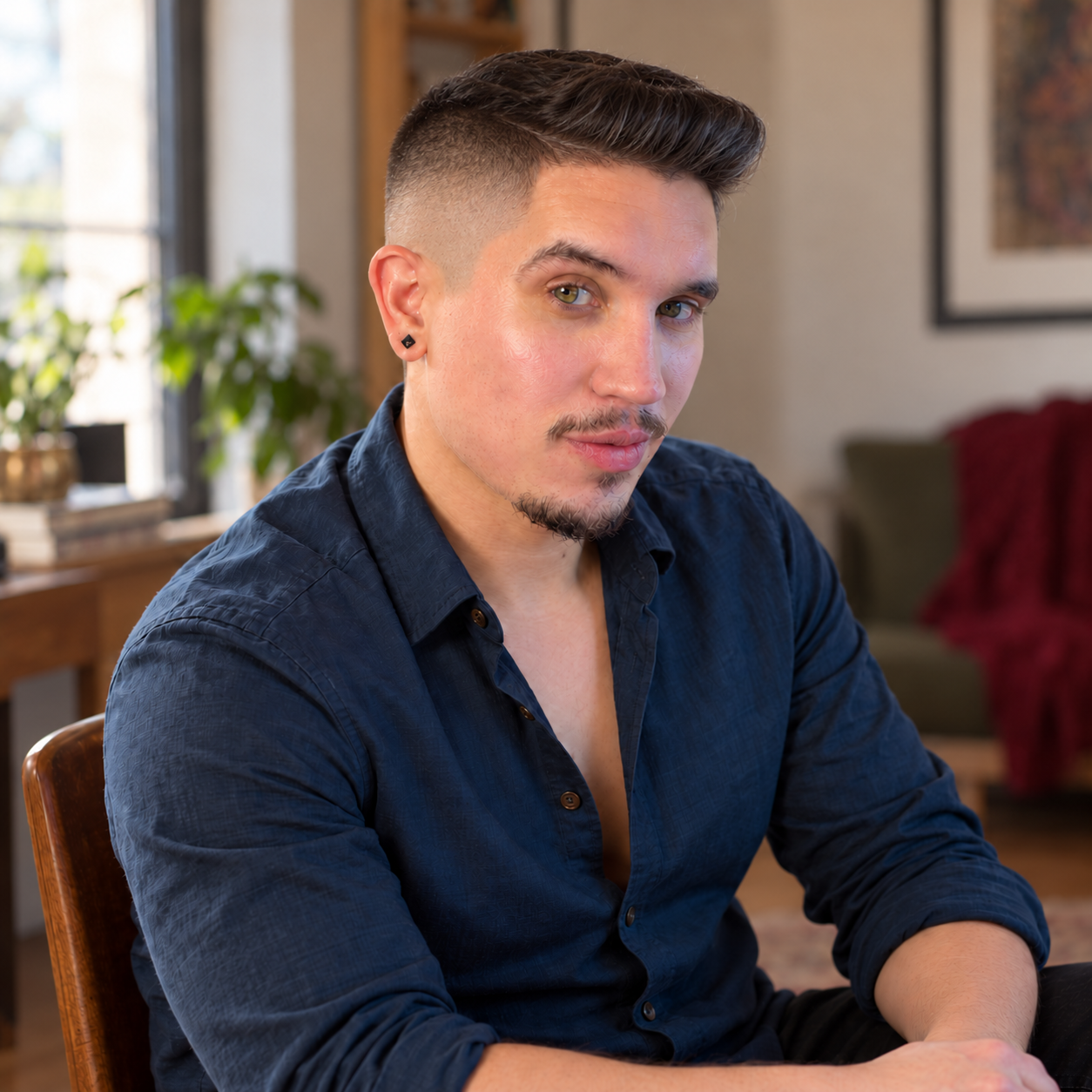
The artist
Chris in Full is the artist identity of Christian Rodriguez, a Cuban-American songwriter, performer, writer and visual creator born and raised in Miami, with Denver, Colorado as his chosen home.
He makes this work from his apartment in Denver, carrying a conviction that came before any tool: his voice and his being are his to express. No institution, authority, audience or AI gets to decide which parts of him are permitted to exist. He can learn from people and technologies without handing them the right to define him. His continuing judgment shapes what he develops, what he refuses and what he chooses to share.
His family’s maternal side connects with Catalonia and the Canary Islands in Spain before ending up in Cuba, while his paternal side connects Cuba and China: his paternal great-grandfather immigrated to Cuba from China. His family carries Cuban culture in its own cadence, often speaking softly without being any less expressive. That history belongs to him, but it is not the whole history of how he became himself.
He connects his family’s bluntness with the aftermath of political repression in Cuba, where speaking against power could carry consequences. Growing up in America with that inheritance gave him two worlds to question. He carries both into a voice neither can prescribe: blunt about power, philosophically exacting and attentive to the emotional life beneath the words. Truthfully begins where that conviction becomes personal.1
Much of his upbringing unfolded among Colombian, Cuban, Venezuelan, Puerto Rican, Mexican and Dominican friends, alongside Haitian, Caucasian American, and Middle Eastern friends. Through those relationships, other ways of speaking, understanding and living became part of his own. With Haitian friends, he practiced French and encountered another language through which to draw closer, exchange ideas and hear the world described from perspectives beyond his own. Cultural understanding grew through familiarity, affection and the experience of letting another person matter.
His Spanish carries that shared life. He can shift into or out of a pronounced Cuban accent, but his everyday expression moves among the influences he grew up around. Some listeners hear Puerto Rico; others hear Cartagena, Colombia. Those impressions recognize something without tracing the whole story. His voice developed among people whose ways of speaking differed, and closeness left its traces.
He carries something from each friend and lover, including those whose lives no longer move alongside his. A relationship’s ending may change how he understands it without making everything meaningful within it untrue. Something another person awakened (a feeling, a question, a way of seeing) can remain part of his life without requiring that person to remain in it. Their significance is not measured only by whether they stayed.
That openness has room for discernment. He recognizes that faults can exist within any culture without exhausting its meaning or erasing the virtues and resilience people have carried through centuries. Wisdom, beauty and ways of caring can be cherished alongside an honest examination of what causes harm. What deserves to continue and what needs to change can belong to the same inheritance. Appreciation does not require idealization; criticism does not require contempt.
Denver, Colorado, is where belonging acquired a different meaning for him. It is the only place where he has felt able to be all of himself without presenting one side to gain acceptance from one group and concealing another to belong elsewhere. The different parts of his life no longer felt as though they had to take turns being visible. A different place made that freedom more possible; he still had to question what upbringing, culture and politics had taught him to fear, conceal or condemn.
That is why Denver is his chosen home. His love for the city is rooted in the experience of being able to live with more of himself present: his intellect and desire, his spirituality, sexuality, and humor, his capacity for heartfelt love and his need for freedom. These could exist together, without one having to explain away another. “All of me” could become more than a private understanding of himself; it could become a way of living among other people.
That possibility also depends on people willing to make room for humanity’s immense diversity. He sees the variety of nature as an invitation to question our demand for sameness. What are we protecting when difference becomes grounds for shame, persecution or war? And when we condemn an enemy outside ourselves, are we sometimes confronting a possibility within human life that we have never allowed ourselves to examine?
Chris in Full carries that freedom into the work: the right to inherit without obeying everything inherited, to be changed without being owned, and to belong without becoming easier to categorize. The people who came before him and those he has loved remain part of his life. What he carries forward is still his to choose.
Shaped by love, desire, conflict, pleasure, loss and his own mistakes. Still choosing what he carries forward. Still his own.
His work moves through music and film, philosophy and spiritual inquiry, psychology, love and sexuality, dark fantasy, humor, grief, anger, ambition, tenderness and the absurdity of ordinary life. Thought, appetite, vulnerability and conviction can take the lead without having to contain the whole of him.
Primarily a lyrically inclined artist, Chris often begins with a mental image carrying a feeling before either has found words. He has a particular instinct for articulating the philosophical and emotional relationships inside that experience: what someone feels, what they have been taught to call it, and what those names allow or forbid. Meditation and close listening give that inner life attention; philosophy, psychology and an education extending through and beyond formal study help him examine what he makes of it. He develops the language through extensive writing and revision, intuition, emotional sensitivity and logical synthesis.
That work becomes Real Hearts & Bodies, his developing genre and musical signature. Its intensity has room for heartfelt love, desire, confrontation, humor and self-questioning. He wants a listener to encounter more than a portrait of him: a possibility in their own life that feels clearer, more speakable or more available than before. What part of yourself have you been calling wrong because someone else needed it quiet?
Real Hearts & Bodies · The full statementThis is not a separate character created for music. It is the same person, in full.
He brings the intimacy of that particular life to questions that reach far beyond it: Who taught us what makes a person worthy? What happens when love makes room for freedom? How much of ourselves have we mistaken for something to hide? Who benefits when your shame keeps you obedient? And what might you choose if being understood no longer required becoming smaller?
In Chris’s words
“I wanted to be accepted. But I still couldn’t erase my truth.”
On the personal beginning of Truthfully
Go inside the opening songWhere I came from. What I carry.
For those who met chris_phx.
For those meeting Chris now.
The inner world, given form
Refractions gives my inner world digital forms: my recorded voice, generated singing and rap, imagery and imagined figures. I develop how those forms sound, appear and relate. A vampire can carry hunger and tenderness; a different vocal character can give warmth or mischief another expression.
I can imagine a figure carrying hunger across centuries and develop its inner life: longing, affection and exclusion within the world it inhabits. Different lives carry different wounds; being made to suffer for a difference does not make that difference a fault.
My recorded voice has a deliberately distinct sound treatment within that world. Generated performances offer other ways to express meanings I develop and want to communicate. Their origins remain different; my writing, performance, revision, editing and continuing direction connect them.
The exchange can change my understanding as well as the work. A sound, image or line can surprise me, clarify something or show me what I need to reconsider. Each form can give something from my life a way to meet yours.
One life, still becoming. More ways to name what you feel, stop mistaking someone else’s limits for your worth, and give your time, love and talent to a life you want to live.
Creative direction & credits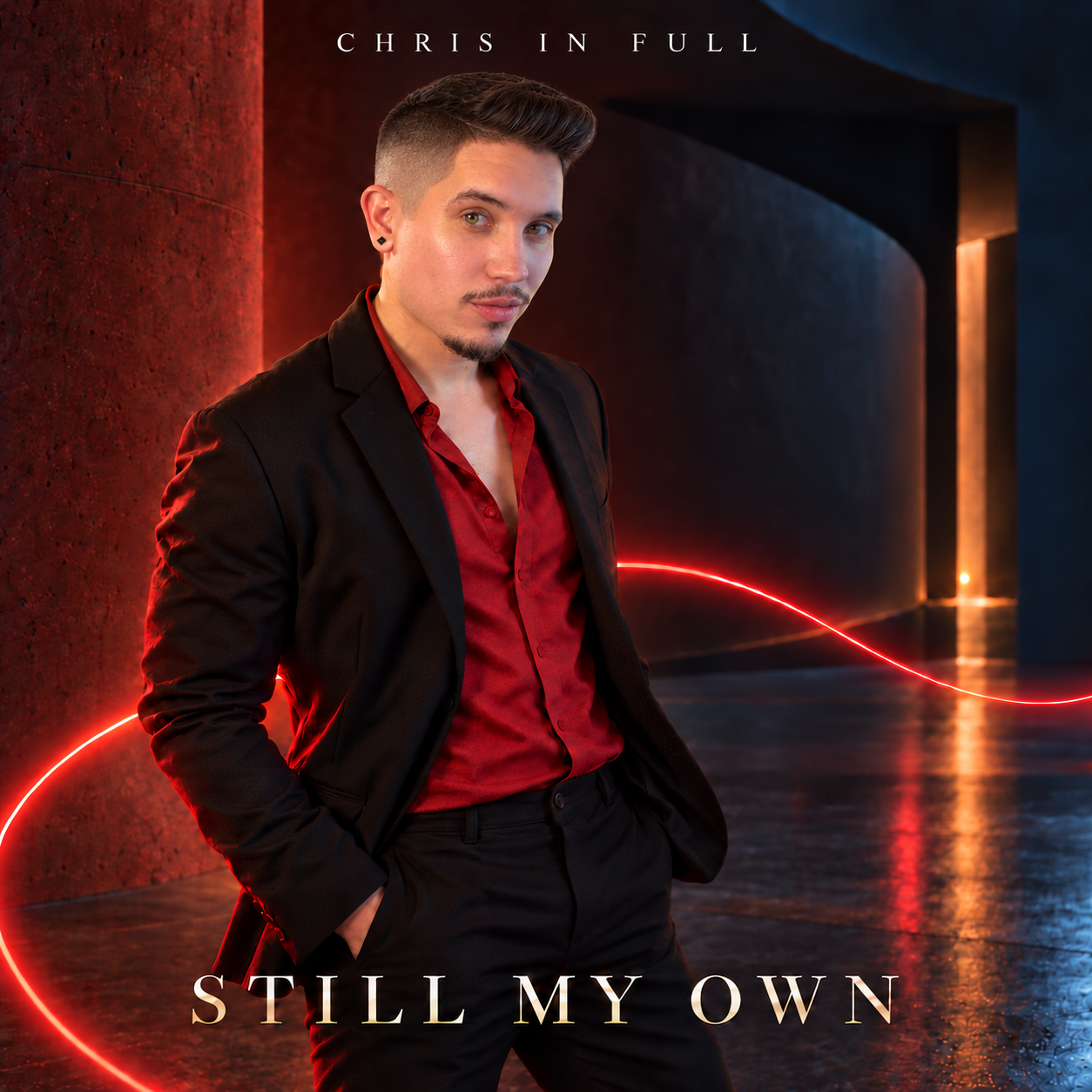 Still My Own
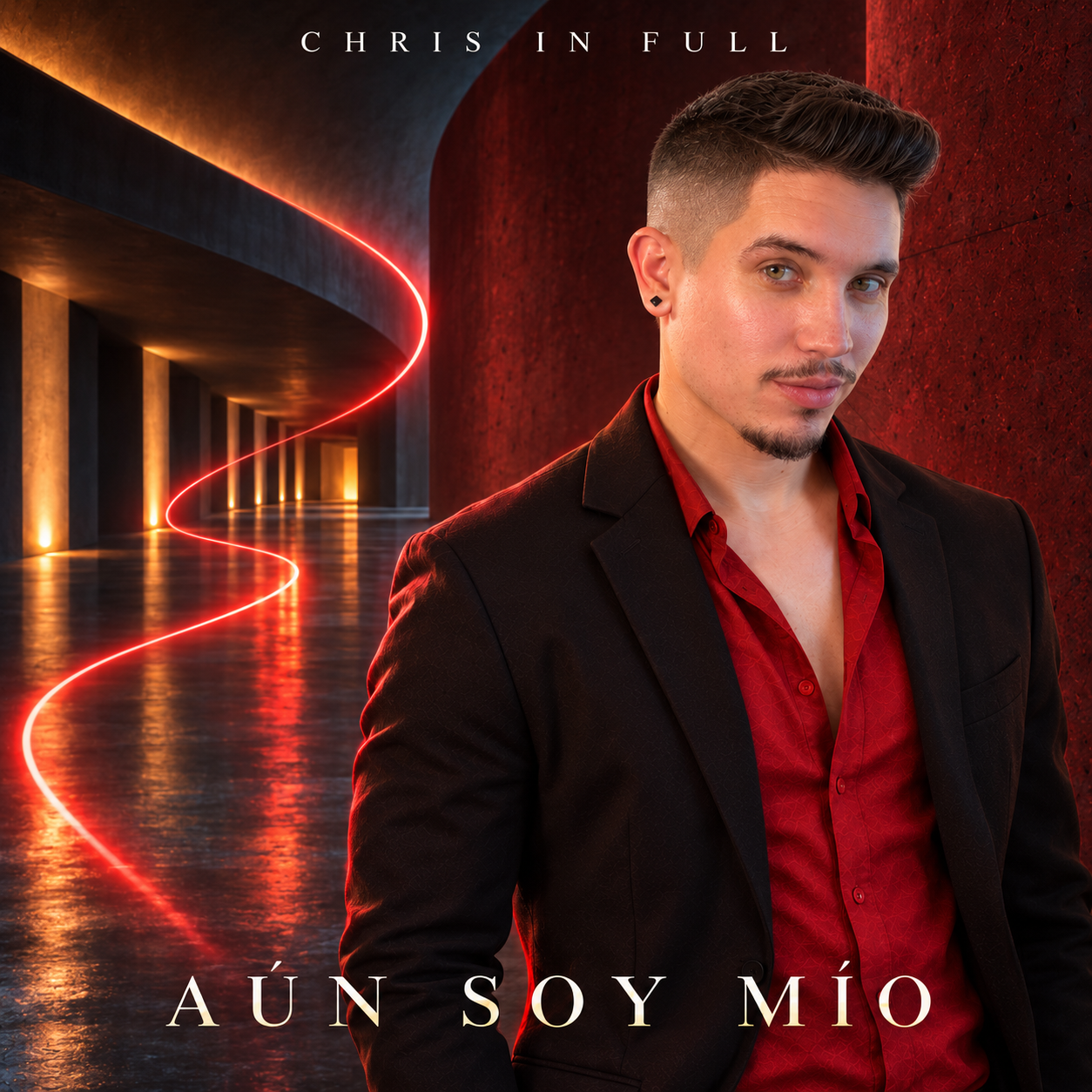 Aún Soy Mío